
Read Latah Property Tax Records
Two offices shape Latah County property tax records. The Assessor sets values each January 1 and keeps the ownership, plat, and exemption data that determines what you owe, while the Treasurer mails the tax bill, takes payments, and tracks any delinquent balance. Pull both records under the same parcel number to see the full picture.
| Field | What It Shows | Where |
|---|---|---|
| Market value | County estimate as of January 1 | Assessor |
| Land and improvements | Value components shown on assessment and bill | Assessor and Treasurer |
| Exemptions | Relief or exempt amount applied | Assessor |
| Bill and status | Amount, installments, paid or delinquent state | Treasurer |
| Tax-code area | Group of taxing districts serving the parcel | Treasurer bill |
Idaho assessment targets market value, but the number exists for tax administration. It is not a sale price, broker opinion, or private appraisal. An exemption or category entry can shift the taxable amount without moving what the land might fetch on the open market.
See the Latah Tax Search
The official Treasurer interface displays PIN and address search guidance.
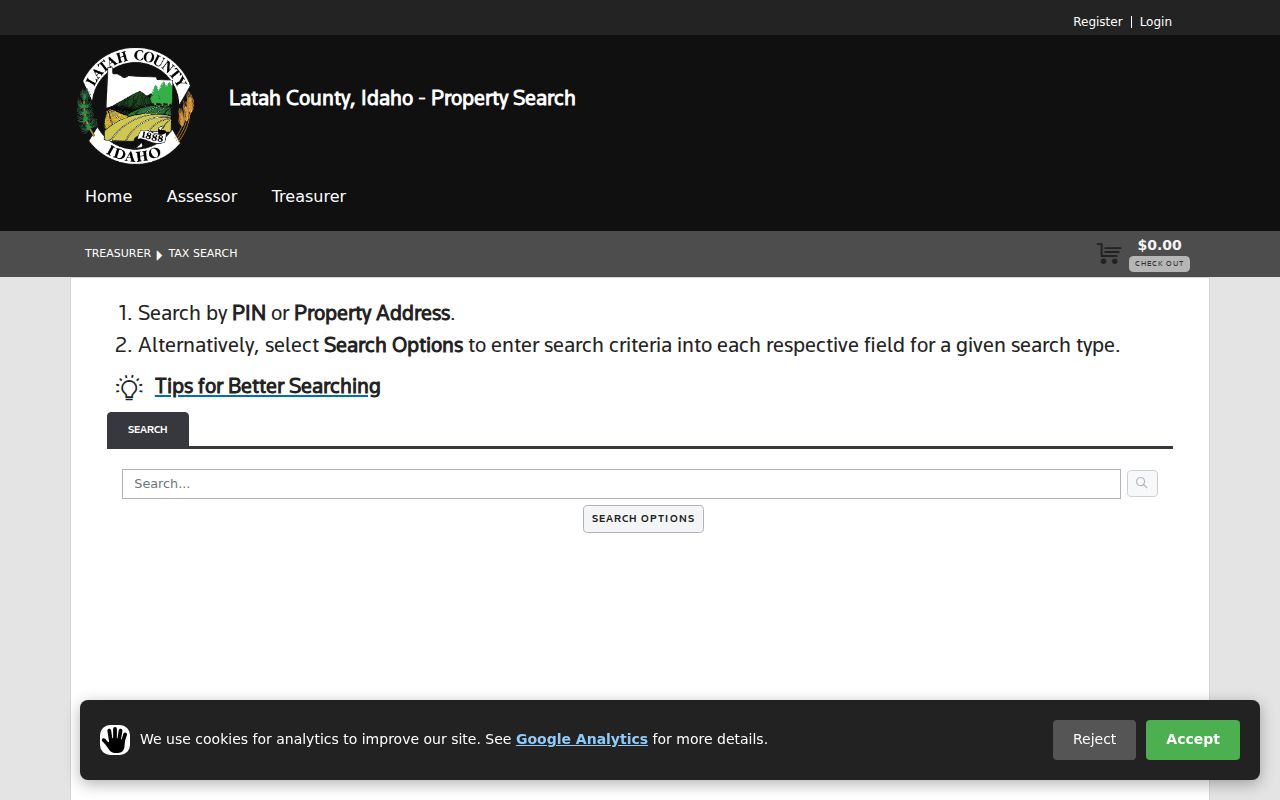
This screen is the entry point for one bill. Record the full PIN and bill year first, then match its fields against the Assessor record.
January 1 Sets Latah Value
January 1 is the valuation date. The Assessor values each Latah County parcel as it stands that day. Full physical reappraisals come at least once in a five-year cycle. Market adjustments can happen every year. So a parcel's value may shift even without a site visit that year. When the assessment notice arrives, the review clock starts. Check the listed property traits against the actual site first. A wrong structure size or class is a separate problem. That differs from a dispute over comparable sales.
Decode a Latah Tax Bill
The front of a Latah County tax bill carries a lot. It lists owner and address, PIN, legal description, property category, tax-code area, market values, exemptions, the tax charge, and installment status. Labels like LAND TOTAL and HO EXEMPT IMPRVMNT keep value components and exemption treatment distinct. The tax-code area drives the levy mix. Latah GIS maps the boundaries behind the rate. They include the overlapping city, fire, school, highway, water, sewer, recreation, cemetery, and other service districts. A postal place name alone explains none of it.
Two Latah Payment Dates
Pay in full by December 20, or split the bill. Half one is due then; half two comes due June 20. County material describes a two-percent late charge plus interest once a bill goes delinquent. The payoff grows over time. So get the current amount from the Treasurer instead of working from an old bill. The county offers its own payment channels. Online card payments carry a 2.5 percent charge, and electronic checks cost $2. Those fees apply to payment, not to searching the records.
Latah RP OC and MH Accounts
The prefixes tell you what an account covers. RP marks real-property land records, OC can mark occupancy-roll improvements, and MH covers manufactured homes. An OC entry may generate its own bill. It covers a structure sitting on land billed elsewhere. That looks like a duplicate but is really an assessment and billing clue. It is not two land titles. Compare every linked PIN together: situs, legal description, tax-code area, and owner labels. Ask the Assessor which account holds the land and which holds the improvements.
Claim Latah Tax Exemptions
The Assessor exemption page sets April 15 as the deadline to apply for or renew covered exempt property. It cites Idaho Code Title 63, chapter 6, along with County Ordinance 265. Homeowner and circuit-breaker relief follow their own eligibility rules. Confirm those with the office.
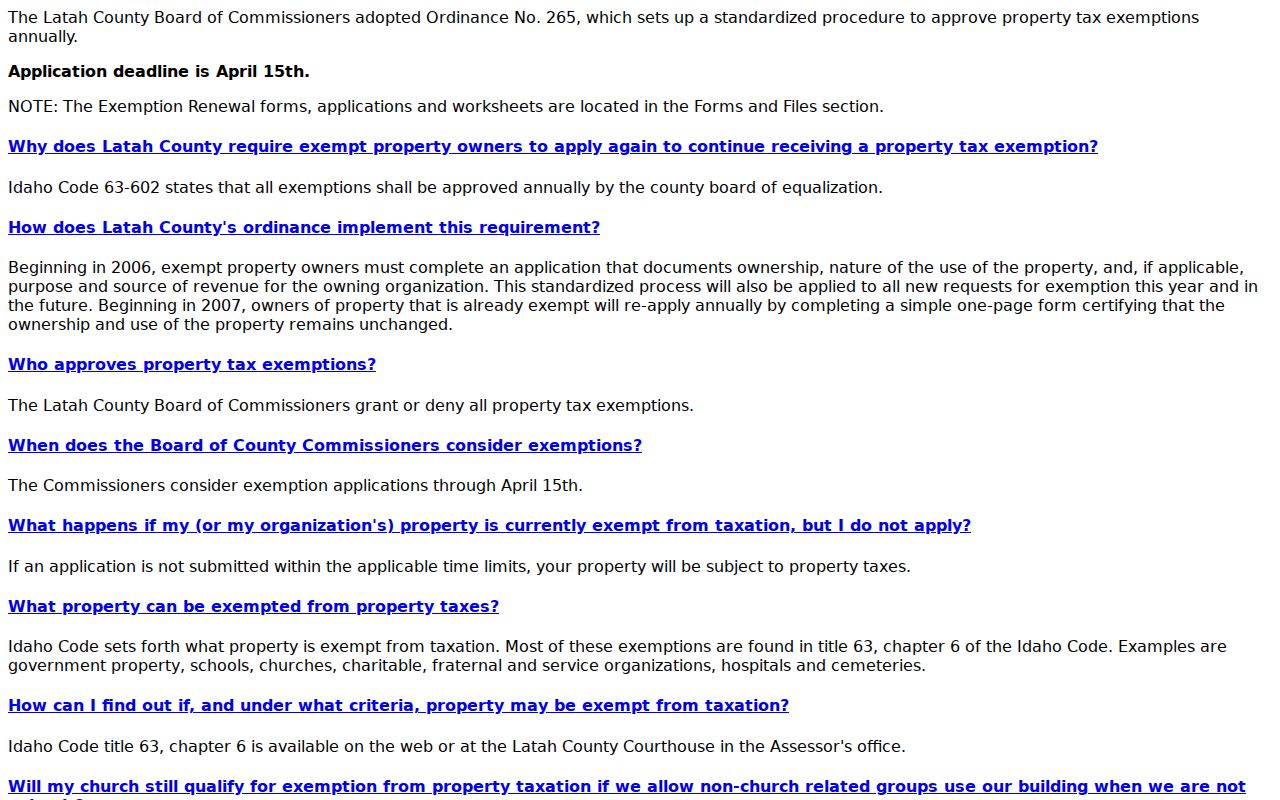
Timing is the page's main message. An exemption field on a bill shows the treatment applied, not who occupies every parcel.
Latah Delinquency Can Split Paths
Unpaid real-property taxes can start trouble after three years. At that point the county tax-deed process may begin. That path is not a Sheriff sale, which flows from a civil judgment or writ. A sale notice can also be cancelled once payment lands. So an old listing never proves present status. Check the current bill and tax-deed stage with the Treasurer. For a Sheriff sale, line up the court case, legal description, and recorded instrument. Who ends up owning the parcel? It still turns on the deed or court document recorded when the process closes.
Inspect Latah Appeal Guidance
The official assessment guidance covers the January 1 value date, the five-year physical cycle, annual adjustment, and the June appeal point.
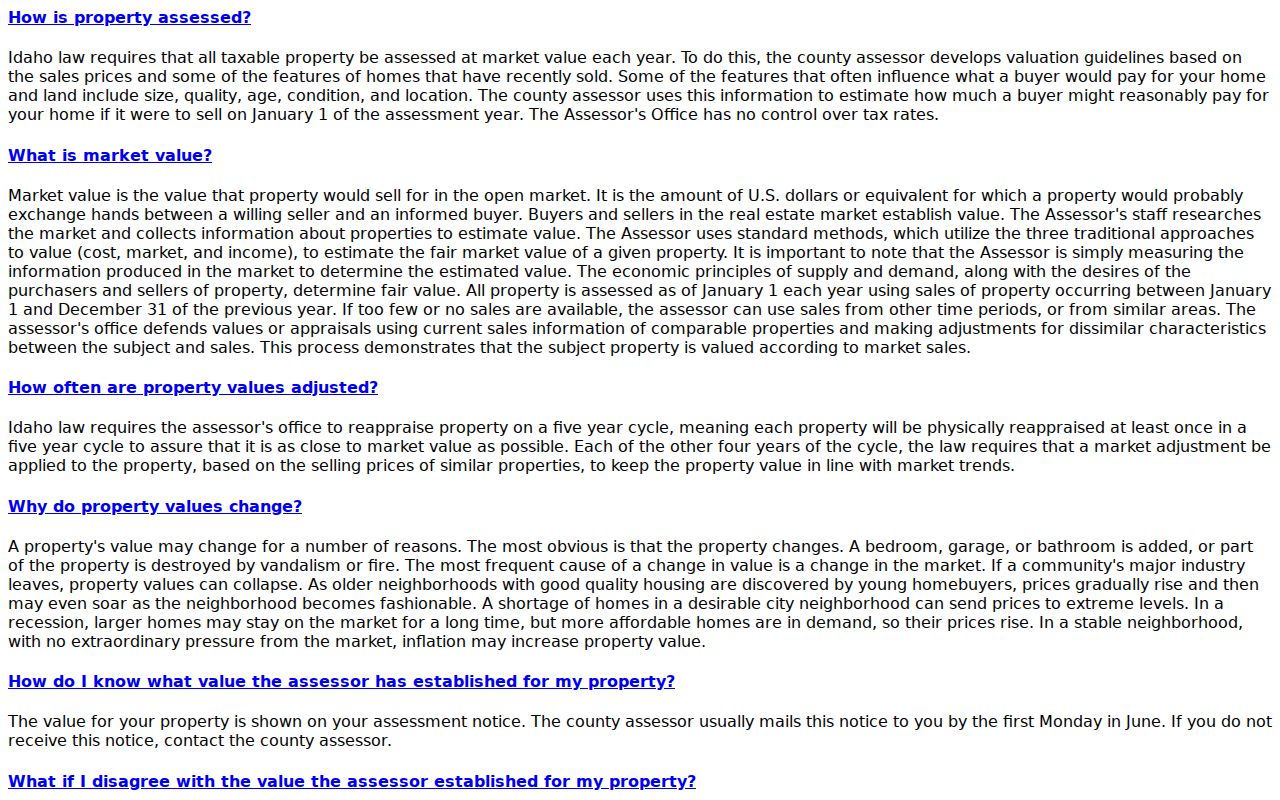
The notice and its deadline sit inside the assessment process. For what assessed and market figures mean beyond the bill, see Latah County property values.
Look Up a Latah Tax Bill
The Treasurer tax search takes a PIN or a property address. Broad-search habits help here too. Enter less address text or a wildcard when a full entry fails. A PIN remains the best key. It ties the bill to the right assessment.
- Search by PIN or a shortened site address and open the matching account.
- Read the bill year, first and second installments, payment status, and delinquency box.
- Compare land, improvement, exemption, and ownership fields with the Assessor record.
- Call the Treasurer before relying on a sale, payoff, or delinquency status.
- Market value
- The Assessor's January 1 estimate under Idaho's market-value system.
- Levy
- The rate produced by taxing-district budgets and the taxable base.
- Homeowner exemption
- Relief for a qualifying primary residence under state and county rules.
- Tax lien
- The public claim arising from unpaid property tax.
Appeal a Latah Assessment
Start with the Assessor once the annual notice arrives. Ask how the parcel characteristics, land, improvements, and comparable evidence produced the value. No agreement? File with the Latah County Board of Equalization by the fourth Monday in June. Strong evidence includes corrected property facts and photographs. Relevant sales can help too. An appraisal tied to the January 1 valuation date also carries weight.
Appeal window. File with the Latah County Board of Equalization by the fourth Monday in June. Confirm the current form and deadline with the Assessor.
Apply for Latah Exemptions
Latah County's exemption page sets an April 15 filing date. Renewal with the Board of Equalization is annual. That rule covers exempt property under Ordinance 265 and Idaho Code Title 63, chapter 6. Homeowner and property-tax reduction programs follow separate rules of their own. Remember, an exemption changes how a parcel is taxed. It does not rewrite the deed or prove what a property sold for.
Use the Assessor's current form and keep your filing confirmation. When relief never shows up on the tax bill, ask why. It might be timing. It might be a missed renewal. Mismatched RP, OC, and MH accounts tied to the same parcel can also be the cause.
Trace Latah Delinquency Carefully
Three years of real-property delinquency starts the tax-deed process in Latah County. That is the word from the Treasurer. County material describes notice, an as-is sale, and redemption. But an old notice may no longer mean much. Payment or later action can change its status. So ask for the current balance, the notice, and the dates behind it.
A sheriff foreclosure sale is a separate matter and can be cancelled after a payoff. A lis pendens only signals pending litigation. Ownership finally rests on the recorded deed, tax deed, sheriff deed, or court order. Check each against the Assessor's tax roll.
Save a Latah Tax Audit
A good Latah tax audit saves several details. Record the PIN, category, bill year, owner label, mailing and situs addresses, legal description, tax-code area, land and improvement figures, exemptions, installments, payment date, and the delinquency box. Note which office, Assessor or Treasurer, supplied each item.
Keep receipts apart from value records. An online payment fee never becomes part of assessed value. An old past-due balance may no longer be current either. Take payoff and appeal questions to whichever office actually owns the data.
Compare Latah Value Fields
Three numbers look alike but answer different questions. The Assessor's market value, the taxable value after exemptions, and the Treasurer's tax charge are related. They are not interchangeable. A lower taxable figure may reflect relief. It may not be a drop in the county's market estimate. A paid bill proves payment, not sale value or clear title.
Idaho ratio studies review assessment levels. They also review uniformity. One hundred percent represents market value in the state's material. Those countywide or category measures cannot replace a parcel notice. Compare the parcel's own characteristics against the Assessor's support for its value.
A recent deed can add context when the instrument states consideration. The parcel card shows no last-sale field, though. Never fill that gap with a guess. A private appraisal answers a different question than the tax record ever will.
Question a Latah Assessment
Start well before the filing deadline. Check ownership, parcel class, situs, land area, improvements, and exemptions on the notice. Bring specific errors to the Assessor and ask for the records behind the estimate. Keep the notice, comparable evidence, photos, and any written response together in one file.
If the concern survives that conversation, get the current Board of Equalization appeal form. Confirm the fourth-Monday-in-June deadline. State each disputed fact plainly and name the correction you want. Filing rules shift, so follow current Latah County instructions rather than an old calendar.
An appeal challenges an assessment. It does not erase a tax due date unless the county says otherwise. Keep payment and appeal questions separate. Ask the Treasurer how an adjustment will appear on a bill once a decision lands.
Refresh Latah Tax Status
Run the Treasurer search again before trusting any payoff or delinquency figure. Payments, late charges, adjustments, exemptions, and appeal results can all shift after a bill is saved. Use the exact PIN and bill year, note the date you checked, and call the Treasurer whenever a current balance affects a sale or tax-deed question in Latah County.